
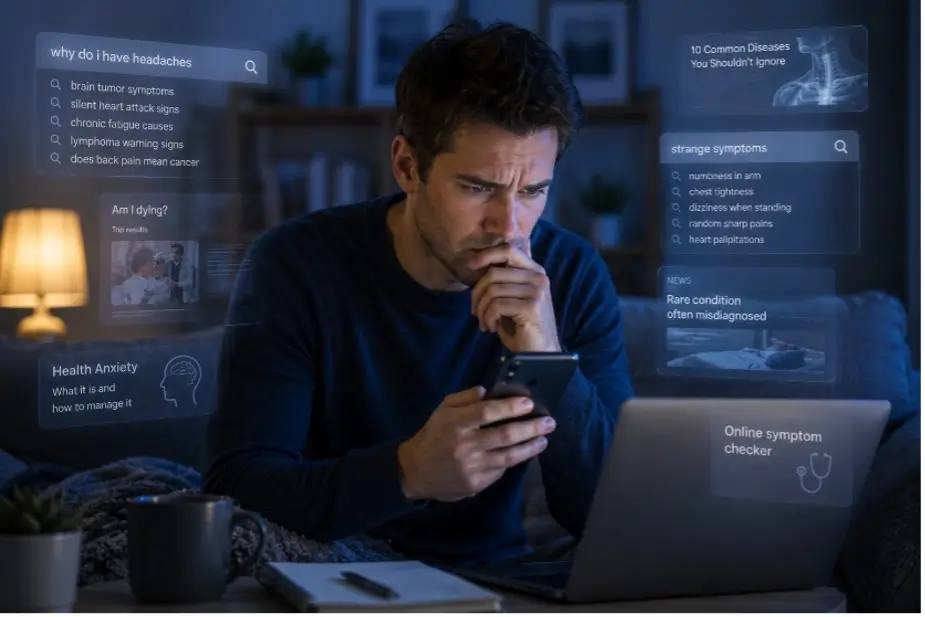
A headache. A rash. A flutter in your chest.
Like many people, you reach for your phone before you reach for your doctor. Within minutes, a simple search leads to countless possibilities, ranging from common and harmless to rare and frightening. Suddenly, what began as mild curiosity turns into growing anxiety.
The internet has made health information more accessible than ever before, and that can be incredibly helpful. But it has also made it much easier to become overwhelmed by information that is incomplete, misleading, or taken out of context.
What Is Health Anxiety?
Health anxiety is persistent worry about having or developing a serious medical condition. The concern often continues even after medical evaluations are reassuring.
People experiencing health anxiety are not “making it up.” The physical sensations they notice are real. What differs is how the brain interprets those sensations.
A normal bodily sensation becomes:
- “What if this is something serious?”
- “Maybe the doctor missed something.”
- “I should check one more website.”
Instead of providing reassurance, repeated searching often increases uncertainty.
Why the Internet Makes It Worse
Our brains are naturally wired to pay attention to potential threats. Online searches take advantage of this tendency.
Search engines are designed to provide possibilities—not probabilities. As a result, uncommon but serious conditions often appear alongside far more likely explanations.
In addition, online information:
- Lacks your personal medical history
- Cannot interpret symptoms in context
- May come from unreliable or outdated sources
- Often emphasizes worst-case scenarios because they attract attention
When anxiety is already present, the brain tends to focus on the most alarming explanation rather than the most likely one.
The Reassurance Trap
Many people search online hoping to feel better.
Instead, they find themselves:
- Reading article after article
- Comparing symptoms to serious illnesses
- Checking multiple websites
- Looking at online forums
- Repeatedly examining their body
- Seeking reassurance from family or friends
Although these behaviors may reduce anxiety briefly, the relief rarely lasts. Before long, another symptom appears—or another article raises another concern.
This creates a cycle:
A physical sensation → online search → temporary reassurance → new worry → another search.
Over time, the brain learns that every symptom requires investigation.
When Anxiety Creates More Symptoms
One of the challenges with health anxiety is that anxiety itself produces physical symptoms.
Stress can cause:
- Muscle tension
- Headaches
- Dizziness
- Chest tightness
- Rapid heartbeat
- Stomach discomfort
- Tingling sensations
- Fatigue
These sensations are genuine, but they may be caused or intensified by the body’s stress response rather than a serious illness.
Unfortunately, noticing these symptoms often leads to more searching—and more anxiety.
How to Break the Cycle
The goal is not to ignore your health. It is to respond thoughtfully instead of reactively.
Helpful strategies include:
- Limit online symptom searches
If you have already reviewed reliable information, resist the urge to keep searching. More information rarely brings more certainty.
- Use trusted medical sources
Not all websites are equally accurate. Reliable health information is very different from anonymous forums or sensational headlines.
- Notice patterns rather than isolated sensations
Our bodies produce countless normal sensations throughout the day. Not every ache, twitch, or pain signals illness.
- Manage anxiety, not just symptoms
Exercise, restorative sleep, mindfulness, therapy, and stress reduction can all decrease the body’s stress response and make physical sensations feel less alarming.
- Talk with your healthcare provider
If a symptom is new, persistent, or concerning, seek medical evaluation rather than relying solely on internet searches.
When to Seek Mental Health Support
Health anxiety deserves the same compassion and treatment as any other anxiety disorder.
Consider reaching out if:
- Health worries occupy a large part of your day.
- You frequently search symptoms online.
- You seek repeated reassurance but never feel satisfied.
- Anxiety is interfering with work, relationships, or sleep.
- You avoid activities because of fear about your health.
Treatment can help you develop healthier ways of responding to uncertainty while reducing the distress that accompanies physical symptoms.
Finding Balance in the Information Age
Access to medical information has never been easier, but information alone does not always bring peace of mind. In fact, more information can sometimes increase uncertainty rather than resolve it.
The goal is not to stop paying attention to your health. It is to recognize when gathering more information is no longer helping and is instead fueling anxiety.
At Revivify Psychiatry, we help patients understand the connection between anxiety, physical symptoms, and the search for reassurance. With the right strategies and support, it is possible to feel informed without becoming overwhelmed.
If health worries have begun to consume your thoughts or interfere with your daily life, you do not have to navigate them alone. Effective treatment can help you regain confidence, reduce anxiety, and focus on living your life rather than constantly fearing illness.